about us
News Center
Your current location:Home - About us - News center
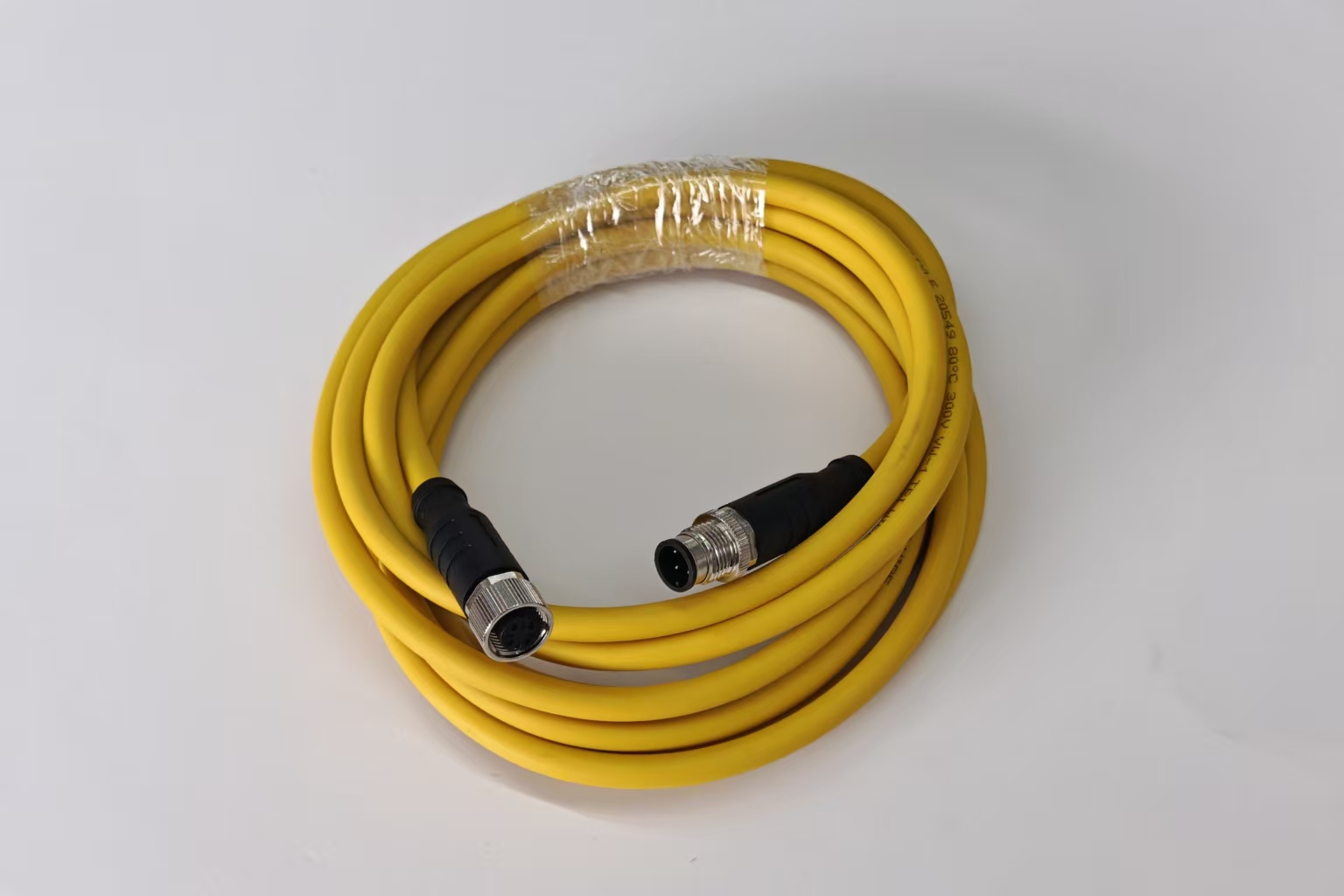
D-Coding exists because Ethernet has different electrical demands. A 100 Mbit link pushes a differential signal through controlled-impedance twisted pairs, and the receiving end cares about pair geometry, shielding continuity, and reflections far more than it cares about raw current capacity. Four contacts in a compact cluster keep the two pairs short and symmetrical inside the connector body, and the offset key keeps a sensor cable from being plugged into a switch port by mistake. This is the same direction industrial networking has been moving for years, including the single-pair Ethernet work covered by IEEE 802.3cg-2019 for multi-node field communication, where connector choice is treated as part of the physical layer rather than an accessory. Mixed plugs fail for a mechanical reason before they fail electrically. An A-coded plug pressed into a D-coded socket meets the key long before the contacts touch. Forcing it past that point does visible damage: the key or the insert deforms, the contact tines bend, and the sealing face no longer sits flat. A connector that has been forced may still make contact for a while, but the bent tine creates a high-resistance junction that drifts with temperature and vibration, so the fault shows up later as random dropouts rather than a dead link. The deformed seal is worse in wet environments, because water reaches the contacts long before anyone notices a communication problem. A plug that will not seat is telling you it is the wrong part, not a tight one.