News Center

Your current location:Home - About us - News center

Conclusion

Time:2026-10-16 09:48:56 Hits: 15

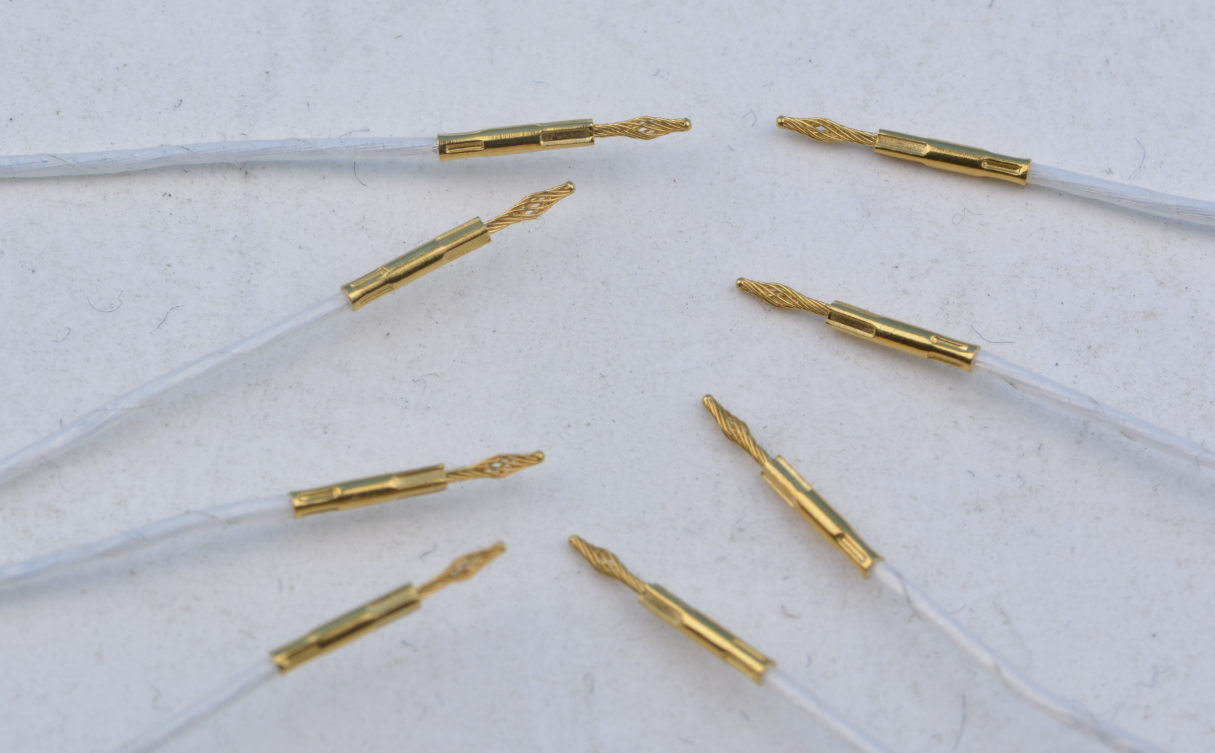
C17200 beryllium copper earns its place in precision twist pin contacts because it behaves like a spring material first and a conductor second. It provides elastic recovery, strength, and fatigue resistance in fine needle wire form, while still offering enough conductivity for low-resistance contact designs. The C2680 brass pin body supplies structure and a current path, and the gold plating over an 80 microinch underplate protects the contact interface. When reviewing a twist pin contact, compare the full material stack: C17200 needle wire, C2680 brass body, laser-welded ends, gold thickness options, ≤10mΩ contact resistance, current rating, temperature range, and nominal 1000 mating cycles. The Ximeconn micro rectangular twist pin connector product information is a useful reference for those confirmed details.
FAQ

Q:Why is beryllium copper C17200 used in twist pin contacts?

A:C17200 is used because it combines elastic recovery, strength, and fatigue resistance with useful electrical conductivity. In a twist pin, the needle wire must flex repeatedly while maintaining contact pressure. C17200 can be formed into fine strands, laser-welded at the ends, and gold plated, so it supports both the spring function and the low-resistance contact function.

Q:Does C17200 improve electrical conductivity or spring performance?

A:It improves spring performance more than it improves conductivity. C17200 is not the highest-conductivity copper alloy, but it offers a strong balance between spring force, elastic recovery, and conductivity. For a twist pin contact, that balance matters because stable contact pressure keeps the real contact area and resistance under control.

Q:How does gold plating interact with beryllium copper contact wires?

A:Gold plating over an 80 microinch underplate protects the C17200 surface from oxidation and helps maintain a stable low-resistance interface. The gold thickness can be 0.8μm, 1.27μm, or custom. Thicker gold generally supports more mating cycles, while thinner gold can suit lower-cycle applications. The right choice depends on the expected wear, current, and mating conditions.

Sources / References

Tool Steels- Chromium Hot-Work Steels

Theoretical analysis of linked leading-edge and trailing-edge flap-type controls at supersonic speeds - NASA Technical Reports Server (NTRS)

Experts in Interconnects | Connector Supplier

Related Examples

Micro rectangular twist pin connector product information

Link: Hybrid connector E-bike power battery pack energy storageM12-connectorsconnectors-cableM12 connectorM8 connectorM5 connectorsconnectors-cable.com