about us
News Center
Your current location:Home - About us - News center
IT12 is a general-purpose
grade rather than a precision one, and on a small formed contact that choice
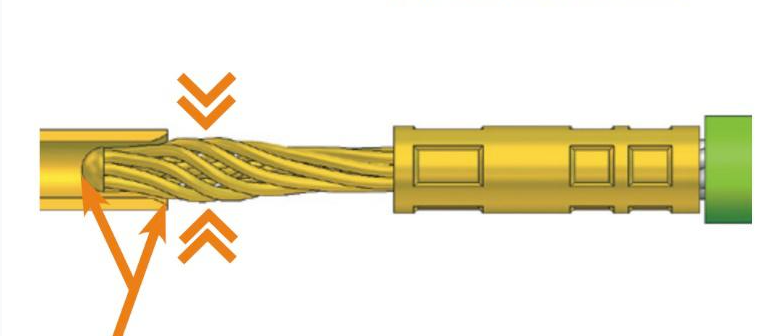
reflects what the part has to do. The twist pin is not a locating feature; it
is a spring. Its job is to deflect, and the wound strands absorb a range of
diameters without losing contact pressure. IT12 gives the pin a workable band
of variation, and the bore band sits alongside it. As long as the two bands
overlap in a sensible way, the strands still deflect enough to hold pressure
across a production run. When the pin band and the bore band drift apart, the
overlap shrinks, and the assembly floor starts seeing parts that pass
dimensional inspection but fail the separation force check.
H12 describes a hole-basis
tolerance applied to the bore, and on a micro contact pair the bore tolerance
often influences the feel of the joint more than the pin tolerance does. A bore
running toward the wide end of its band gives the strands more room, so they
deflect less and press more gently, which pushes separation force toward the
lower end of the 0.25N to 0.8N window. A bore near the tight end does the
opposite. This is why the bore dimension deserves the same attention as the pin
geometry during structural layout: the pin sets the available spring force, and
the bore decides how much of it is actually used. Read together, the four
elements form a chain. Nominal sizes establish the geometry, tolerance grades
establish how much that geometry moves, the gauge fixes a reference for
inspection, and separation force confirms that pin and bore are working as a
pair. A design engineer who follows that chain can tell whether a stated
dimensional set is complete before committing to layout, tooling, or a supplier
conversation. Anyone comparing options can check the same four items, then look
at how the contact pair is specified in the published data for the Ximeconn
micro rectangular twist pin contact.