about us
News Center
Your current location:Home - About us - News center
A-Coding and D-Coding are two answers to two different wiring problems, built on the same M12 shell. A-Coding handles the sensor-level mix of low-voltage supply and signal, plus five-pin bus runs; D-Coding handles four-contact industrial Ethernet with its pair geometry and shield path. The keyed face is the fastest check in the field, and it is worth trusting, because the two codings are not interchangeable and a forced fit costs more than the correct cable would have. For anyone reviewing options, the coding support listed on a listing is the first thing to confirm, followed by the ratings and branch form the application actually needs.
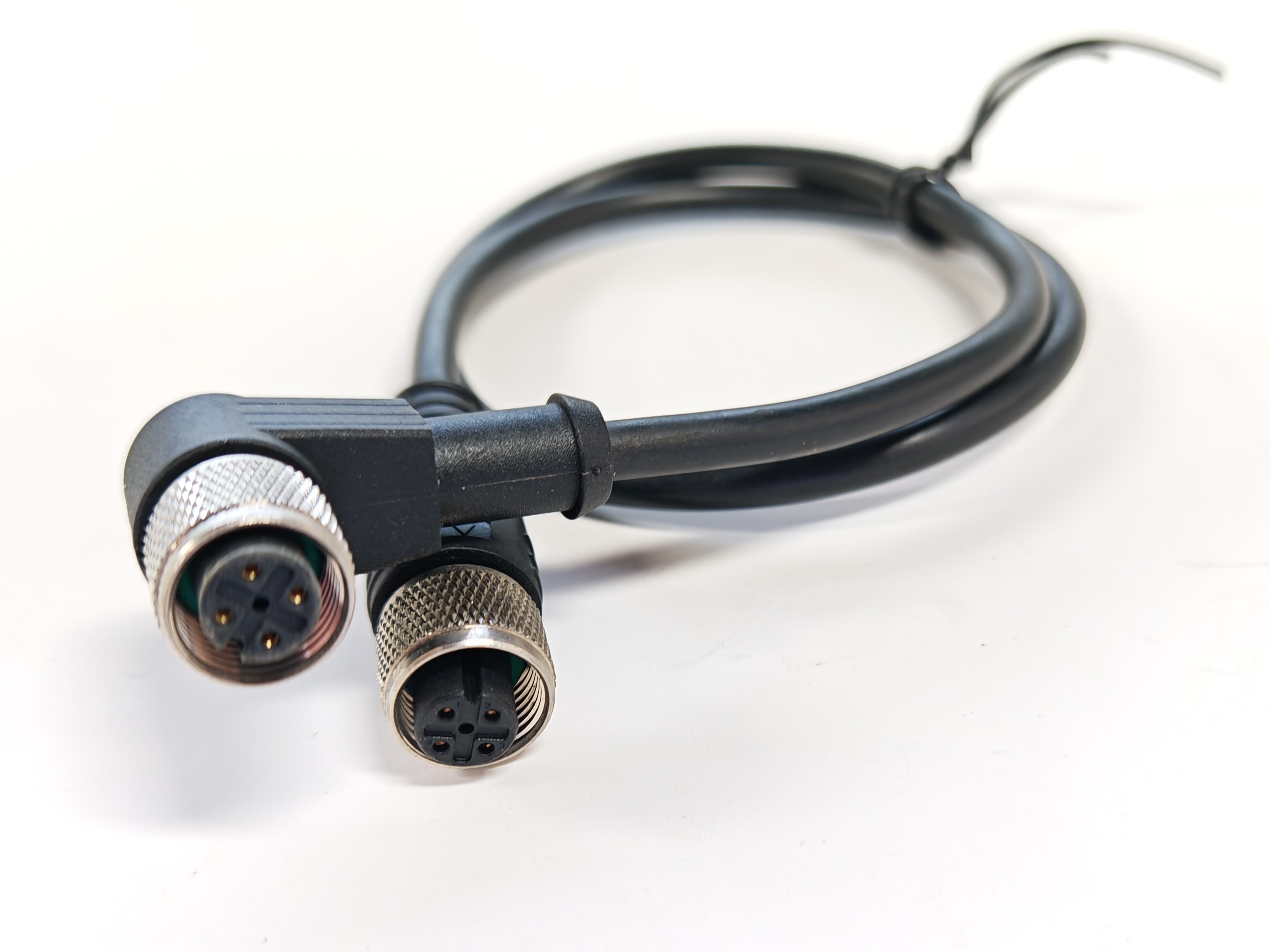
A: The difference is the keyed insert and what it carries. A-Coding uses a widely spread contact layout with the key at a reference position, and it typically carries sensor power, switching signals, or five-pin bus pairs. D-Coding uses four contacts in a compact group with the key rotated to a different angle, built for two twisted pairs in 100 Mbit industrial Ethernet. Same thread, same locking nut, different face and different job.
A: No. The key on the plug reaches the keyway of the socket before the contacts engage, so the plug never seats. Forcing it bends contact tines, distorts the insert, and damages the sealing face, which leads to intermittent connections and water ingress later on. A plug that stops short is the wrong coding, and the correct cable is the only fix.
A: A-Coding is the familiar choice for CAN bus and DeviceNet-style five-pin wiring, where two contacts carry the differential pair and two more carry supply, with a fifth for drain or shield. D-Coding is the common choice for 100 Mbit industrial Ethernet at the device level, using four contacts as two twisted pairs. A branch distributor that lists both codings can serve either network type, provided the pinout and protocol match the device on each port.
DeviceNet Communication Network | ODVA Technologies
CAN BUS 3-way M12 distributor | Ximeconn Waterproof Connectors